Why Courtroom Experience Counts for a Criminal Defense Lawyer in Lafayette LA
@jeffreybwdg721
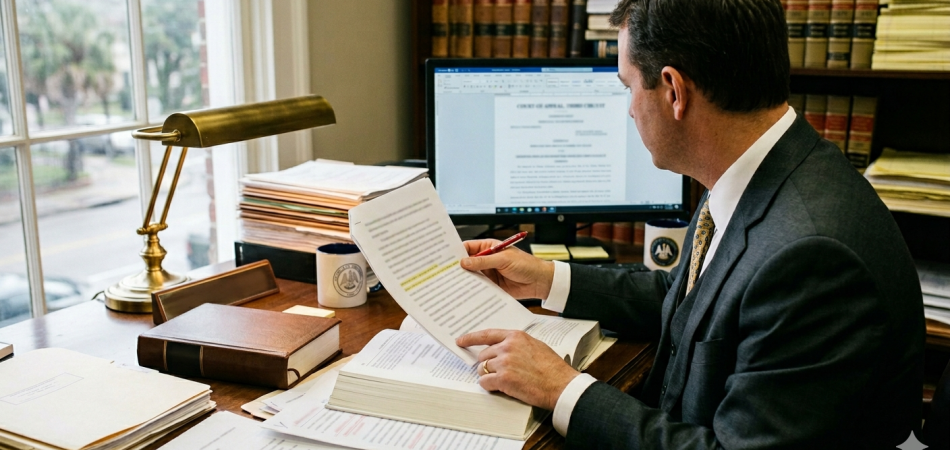
When someone is charged with a crime, the first question is often about penalties. Jail time, fines, probation, a suspended sentence, a permanent record, damage to a professional license, immigration problems, and family fallout tend to dominate the conversation. Those consequences are real. But there is another issue that deserves just as much attention, and it often gets overlooked early in a case: whether the lawyer handling the defense has genuine courtroom experience.
That point matters everywhere, but it matters in a very practical way in Lafayette. Local practice has its own pace, personalities, expectations, and pressure points. A lawyer can be smart, diligent, and well intentioned, yet still be outmatched if the case reaches a contested hearing or trial and that lawyer has not spent serious time in court. Criminal cases do not unfold only on paper. They move through arraignments, bond hearings, motion practice, evidentiary fights, plea negotiations, probation issues, sentencing hearings, and sometimes jury trials. Each stage rewards judgment developed under real courtroom conditions.
A person looking for a Criminal defense lawyer Lafayette LA should understand that courtroom experience is not a resume ornament. It changes how a case is investigated, how it is negotiated, how the prosecution values risk, and how a judge receives the defense. It can affect outcomes long before anyone is sworn in as a juror.
The difference between knowing the law and trying a case
Law school teaches doctrine. Practice teaches consequences. Those are not the same thing.
A lawyer may know the statute for possession, domestic abuse battery, DWI, theft, simple burglary, obstruction, or a violent felony charge. A lawyer may even be able to explain the range of punishment accurately. But trial work demands more than legal knowledge. It requires the ability to read a witness in real time, decide whether a question helps or hurts, preserve an objection without alienating the court, recognize when a juror is disengaged, and sense when a prosecutor is pushing a weak point too hard because the underlying evidence is shakier than it appears.
These are not abstract skills. They affect actual decisions. Consider a suppression hearing involving a traffic stop. On paper, the issue may look narrow: reasonable suspicion, probable cause, consent, timing, body camera footage, and chain of custody. In Criminal defense lawyer Lafayette LA a courtroom, the hearing may turn on whether the officer can clearly explain why the stop was extended, whether the body camera timeline matches the testimony, whether the lawyer catches an inconsistency quickly enough to pin it down, and whether the judge believes the defense is identifying a real constitutional problem or simply casting about for one.
That kind of work gets sharper through repetition. Lawyers who regularly stand up in court learn where the facts usually crack, which arguments judges hear too often, and how to present a challenge in a way that feels credible rather than performative.
Prosecutors negotiate differently with lawyers who are ready to try the case
This is one of the least glamorous truths in criminal defense, but it is one of the most important.
Many criminal cases resolve without trial. That does not mean trial ability is less important. Quite the opposite. Plea negotiations are often shaped by the prosecutor’s assessment of risk. If the State believes defense counsel will thoroughly test the evidence, file targeted motions, cross examine effectively, and actually take the case to trial when necessary, the value of the case changes. Weaknesses matter more. Marginal witnesses become liabilities. Sloppy police work becomes expensive. Overcharging becomes harder to maintain.
On the other hand, if the prosecutor senses that defense counsel is uncomfortable in court or unlikely to push the case to a hearing, the incentive to offer a meaningful reduction often shrinks. That is not how the system should work in theory, but in practice it often does.
Experienced courtroom lawyers understand this dynamic and use it carefully. They do not posture just to posture. Empty threats lose value quickly. What matters is a reputation built over time. When a prosecutor knows a defense lawyer can identify a suppressible search issue, challenge a shaky identification, expose gaps in digital evidence, or present a clean theme to a jury, negotiations become more serious. Sometimes the best courtroom win is the one that happens in a conference room because the other side knows what could happen in open court.
Local courtroom experience is not interchangeable
Criminal practice is local in ways that nonlawyers often underestimate. The written law may apply statewide, but the actual administration of justice has local texture. That is true in Lafayette, where familiarity with the courthouse, scheduling realities, local expectations, and courtroom customs can save a client from avoidable mistakes and missed opportunities.
A lawyer with real Lafayette courtroom experience usually knows more than the law. That lawyer knows how certain judges prefer motions to be framed, how aggressively some prosecutors litigate particular charges, what kinds of mitigation actually carry weight at sentencing, and how local juries tend to react to certain police testimony, certain defenses, and certain personal histories. None of this replaces legal merit, but it shapes strategy.
Take a first-offense DWI case. To the untrained eye, those cases can look routine. They are not. Whether the stop was lawful, whether field sobriety tests were administered properly, whether video helps or hurts, whether a refusal is explainable, whether the defendant’s job requires driving, and whether diversion is realistic can all alter the defense plan. A courtroom-tested lawyer in Lafayette will not just ask whether the charge can be reduced. That lawyer will ask how the local court is likely to view the officer’s testimony, whether a motion hearing creates leverage, whether a rushed plea creates long-term licensing consequences, and whether the client’s personal circumstances justify pushing harder now rather than cleaning up the damage later.
Courtroom experience changes case preparation from day one
Good trial lawyers prepare differently, even when the case may never reach a verdict.
They look for the file behind the file. Police reports are useful, but they are also advocacy documents. They flatten uncertainty, omit side details that later become central, and often present conclusions as if they were facts. An experienced courtroom lawyer reads reports with skepticism. What does the body camera show before the narrative starts? What dispatch records exist? Was a witness interview summarized or recorded? Who handled the evidence? Are timestamps consistent? Was a confession preceded by clear Miranda compliance? Did a search rest on actual consent or just submission to authority?
That posture affects early advice. Clients often want immediate certainty. Can this be dismissed? Will I go to jail? Should I plead now and move on? A lawyer with trial experience tends to be careful with predictions, not because the lawyer lacks confidence, but because courtroom veterans know how facts evolve under scrutiny. A witness who sounds strong in a report may collapse on cross examination. A supposedly clean search may turn messy when a video is reviewed frame by frame. A small detail in a 911 call may open a defense that no one noticed at arraignment.
This kind of disciplined preparation often saves clients from bad early decisions. It also helps identify when a fast resolution is genuinely smart. Courtroom experience is not about trying every case. It is about knowing which cases should be fought, which should be resolved, and when more information is needed before making that call.
Hearings often decide more than trials do
People talk about trial because it is dramatic. In practice, many criminal cases are won or lost in pretrial hearings.
A motion to suppress can gut the prosecution’s evidence. A bond hearing can determine whether a person keeps a job, supports children, or spirals into desperation while waiting for trial. A hearing on prior convictions can alter sentencing exposure dramatically. A challenge to expert testimony can narrow what the jury will ever hear. A probation revocation hearing can mean the difference between a second chance and time in custody.
These hearings reward lawyers who are comfortable thinking on their feet. A witness says something unexpected. The judge asks a pointed question. An exhibit comes in a different way than anticipated. Opposing counsel overreaches. The script changes. Lawyers who have spent time in court learn how to adjust without losing the thread. They know when to press, when to pivot, and when silence is more effective than one more argument.
That is especially important in criminal court, where the pace can be fast and the consequences immediate. A hesitant or disorganized performance can do real damage even if the law is technically on the defense side. Judges need clear framing. Facts need to be tied to legal standards with precision. Objections need to be timely and preserved properly. A courtroom lawyer who has done this work repeatedly is far more likely to execute under pressure.
Juries notice confidence, but they also notice authenticity
Trial skill is not theatrical flair. Jurors are usually quicker and more skeptical than lawyers assume. They can spot canned outrage, overdone cross examination, and arguments that do not fit the evidence. They also respond to clarity, restraint, and a lawyer who seems grounded in the facts rather than desperate to distract from them.
This is where seasoned courtroom experience matters. Lawyers who have actually tried criminal cases understand pacing. They know that a juror can only absorb so much detail at once. They know when a cross examination should be short and surgical and when it should build slowly. They know that a defense theme must be simple enough to survive note taking, fatigue, and the natural confusion that comes with conflicting testimony.
A young lawyer can certainly be talented. Every experienced trial lawyer was once new. But talent and courtroom seasoning are different things. Cross examining an officer in a misdemeanor bench trial is not the same as defending a felony before a jury where the stakes include years of a client’s life. The pressure changes everything. So does the need to connect legal standards to common sense in a room full of people who did not spend years studying evidence rules.
In Lafayette, as in many places, jurors bring their own assumptions about police, crime, neighborhood disputes, intoxication, self-defense, and credibility. A lawyer with local trial experience has usually seen those assumptions up close. That does not guarantee a favorable result. It does mean the defense is more likely to be built with real juror reactions in mind, not just legal theory.
Sentencing is also a courtroom skill
Even after a plea or conviction, courtroom experience remains important. Sentencing is often treated as an afterthought by people who have never watched one unfold. That is a mistake.
A strong sentencing presentation requires more than asking for leniency. It means understanding what matters to the judge, organizing mitigation in a way that feels earned rather than manipulative, and addressing the harm in the case without surrendering the client’s dignity. It may involve treatment records, employment history, military service, family responsibilities, counseling progress, restitution efforts, educational goals, or the absence of prior violence. It may also require confronting difficult facts directly rather than trying to gloss over them.
There is an art to this. Too much excuse making can backfire. Too little context can leave the court with only the prosecution’s frame. Experienced courtroom lawyers know how to walk that line. They know when live testimony helps and when a concise record is stronger. They know how to present a client as a whole person rather than a case number without slipping into sentimentality.
For many defendants, sentencing is the moment that most directly shapes the future. An experienced advocate can matter enormously there.
Some of the most important courtroom instincts never appear on a website
Clients often compare lawyers based on years in practice, office location, fees, former job titles, and online reviews. Those things can offer some value, but they rarely tell the full story.
What matters in court is often harder to market. Can the lawyer spot a witness contradiction as it happens? Can the lawyer turn a vague answer into a precise admission? Does the lawyer know when not to object because the answer is actually helping? Can the lawyer maintain credibility with the judge after losing an argument? Can the lawyer keep a nervous client calm enough to testify clearly? Can the lawyer read when a prosecutor’s confidence is real and when it is bluff?
Those are lived skills. They come from being in the room, making judgment calls, and living with the consequences.
I have seen cases where the file looked bad at first glance and improved dramatically because counsel knew how to challenge the State’s assumptions one factual layer at a time. I have also seen cases with obvious defense issues get resolved poorly because counsel treated court like a formality and negotiation like the whole job. The difference often came down to courtroom maturity.
The plea bargain question is more complicated than people think
Some people hear “courtroom experience” and assume it means a lawyer who wants to fight every case to the bitter end. That can be just as dangerous as timidity.
The best courtroom lawyers are often the most pragmatic. Because they understand trial risk, they are usually better at measuring it honestly. They can tell a client when a plea offer is unexpectedly favorable. They can explain when a suppression issue is interesting but unlikely to carry the day. They can distinguish between a triable case and a case that simply inspires wishful thinking.
That kind of judgment protects clients from two opposite mistakes: folding too early and gambling recklessly. A seasoned Criminal defense lawyer Lafayette LA should be able to do both, negotiate from strength and try the case if needed. One skill without the other leaves gaps.
There is also a human dimension here. A person charged with a crime may be scared, angry, embarrassed, or exhausted. Family members may push for a fast deal. Employers may be waiting. Money may be tight. Those pressures can distort decision making. Courtroom-experienced counsel can often bring steadiness to that moment by grounding the conversation in probabilities rather than panic.
What courtroom experience looks like in everyday charges
Not every case is a headline case. Many involve familiar allegations: DWI, drug possession, simple battery, domestic accusations, theft, gun charges, resisting, probation violations, or juvenile issues. Yet these routine labels can hide serious complexity.
A domestic allegation may involve self-defense, mutual combat, intoxication, inconsistent statements, or an accuser who wants the case dropped but no longer controls that decision. A theft case may hinge on intent, store procedures, surveillance quality, or whether the accused was correctly identified. A gun case may depend on constructive possession, vehicle access, prior convictions, or the legality of the stop. A probation violation may turn on whether the violation is technical, whether treatment was available, or whether the original sentence leaves room for a practical solution.
Courtroom experience helps a lawyer sort signal from noise. It keeps the defense from collapsing into generic arguments. It also helps avoid overcomplication. Many cases are not won with ten theories. They are won with one clear, credible theory developed carefully and presented well.
How clients can evaluate courtroom experience without being misled
A consultation is not just for the lawyer to evaluate the case. It is also the client’s opportunity to evaluate the lawyer.
Ask direct questions. How often do you handle contested criminal hearings? When was your last jury trial? What kinds of charges do you most often take to court? If this case cannot be resolved favorably, are you prepared to try it? How do local judges tend to approach bond, suppression, and sentencing in cases like this? What weaknesses do you see in the State’s proof right now, and what information would you need before giving firmer advice?
The value is not only in the answers, but in how they are given. Experienced courtroom lawyers tend to speak concretely. They do not promise miracles. They can usually explain process, risk, and strategy without relying on slogans. They know where uncertainty lives. They often discuss not just the best-case result, but the likely range of outcomes and what could change that range.
A lawyer who immediately guarantees dismissal or insists every case should go to trial is not displaying strength. More often, that is a sign of salesmanship. Courtroom experience usually produces a more measured voice.
The right lawyer is not always the loudest one
Criminal defense attracts strong personalities, and confidence matters. But there is a difference between confidence and noise.
The most effective courtroom advocates are often controlled rather than flashy. They prepare deeply. They know the record. They do not waste credibility on weak arguments. They can be forceful when needed, but they are not performative for its own sake. Judges notice that. Prosecutors notice that. Juries notice that.
If you are facing charges in Lafayette, the practical question is not which lawyer sounds the toughest online. It is which lawyer can protect your position at each stage of the case, from bond to motions to negotiation to trial to sentencing if necessary. That kind of protection comes from experience tested in actual courtrooms, not just described in marketing copy.
For anyone searching for a Criminal defense lawyer Lafayette LA, courtroom experience should be near the top of the list of priorities. It influences leverage, preparation, credibility, strategy, and results. Criminal cases are too consequential to hand over to someone who only looks comfortable when nothing is contested. When your freedom, record, work, family, and future are at stake, experience in the courtroom is not an extra. It is part of the defense itself.
Ikerd Law Firm
600 Jefferson St Ste 903
Lafayette, LA 70501
(337) 366-8994
FAQ About Criminal defense lawyer Lafayette LA
How much does a criminal lawyer cost in Louisiana?
Fees vary with the charges, complexity, expected work, and attorney's experience. Ask for a written fee agreement explaining the services included, payment schedule, and any separate expenses before hiring counsel. An initial consultation can help clarify the likely scope and cost of representation.
Who is the best criminal defense attorney in Lafayette, LA?
There is no single attorney who is the best fit for every case. Look for a Louisiana-licensed lawyer with experience handling similar charges, clear communication, and a fee arrangement you understand. Discuss the lawyer's approach during a consultation, and be cautious of anyone who guarantees a result.
How to afford a criminal defense lawyer?
Ask prospective attorneys about their fees and whether payment arrangements are available. If you cannot afford representation, ask the court or local public defender's office how to apply for appointed counsel. Eligibility depends on your finances, the case, and applicable requirements; appointment is not automatic.